
Laparoscopic Appendix Surgery in Mumbai
What is Laparoscopic Appendix Surgery
Appendicitis occurs when the appendix, a small pouch attached to the large intestine, becomes inflamed. It can cause abdominal pain, nausea, loss of appetite and fever, and may worsen if treatment is delayed. In some cases, the inflamed appendix can rupture, allowing infection to spread within the abdomen. Prompt medical assessment is important when appendicitis is suspected.
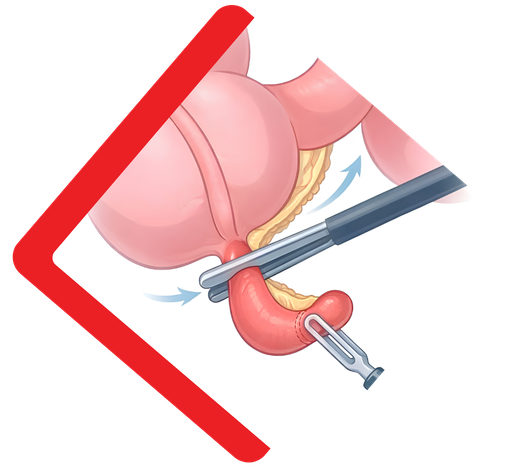
Laparoscopic appendix surgery, also known as laparoscopic appendectomy, is a minimally invasive procedure used to remove an inflamed appendix through small abdominal incisions. At Shree Hospital, Vashi, surgical evaluation helps determine the appropriate treatment based on the severity of inflammation, investigation findings and the patient’s overall condition.
KNOW THE BASICS
Appendicitis Explained: When Abdominal Pain Needs Surgical Attention
The appendix is a narrow, finger-shaped pouch located near the junction of the small and large intestines, usually in the lower-right abdomen. Its exact role in the body is not fully understood, but inflammation of this structure can lead to a condition called appendicitis. The pain may begin around the navel and later shift towards the lower-right side of the abdomen, although symptoms can vary between individuals.
Appendicitis often develops when the opening of the appendix becomes blocked, allowing pressure and inflammation to build up. Without appropriate treatment, the condition can progress to infection, tissue damage or perforation. A ruptured appendix can cause peritonitis, an infection of the lining of the abdominal cavity, or lead to an abscess. These complications may require more complex treatment than uncomplicated appendicitis.
Diagnosis involves reviewing symptoms, examining the abdomen and assessing relevant investigations. Blood tests may help identify inflammation, while ultrasound or CT imaging may be used when the diagnosis is uncertain or further assessment is needed. Because appendicitis can progress over time, suspected cases require timely medical evaluation rather than prolonged self-treatment.

When Is Laparoscopic Appendix Surgery Considered?
Surgery is commonly recommended for acute appendicitis, although selected uncomplicated cases may be assessed for antibiotic treatment under medical supervision. The decision depends on the diagnosis, severity of inflammation, risk of complications and the patient’s overall health.
Persistent Abdominal Pain
Pain that increasingly concentrates in the lower-right abdomen may indicate appendicitis and requires prompt medical assessment.
Confirmed Appendicitis
Clinical findings and appropriate investigations may establish inflammation of the appendix requiring surgical treatment.
Worsening Inflammation
Progressive symptoms or findings suggesting complicated appendicitis may require urgent intervention and closer monitoring.
Risk of Rupture
When the appendix is severely inflamed or complications are suspected, timely treatment is important to reduce the risk of further infection.
Types of Appendicitis: Why the Stage Matters
Appendicitis can range from early inflammation to a more advanced condition involving tissue damage, perforation or an abscess. Identifying the stage helps the surgical team determine the urgency of treatment and whether additional measures are required. Symptoms alone may not reliably establish the extent of inflammation, so examination and appropriate investigations are important. Uncomplicated appendicitis generally involves inflammation without perforation or a surrounding abscess. Complicated appendicitis may involve gangrene, rupture, infection within the abdominal cavity or a localised collection of pus. These presentations can require different treatment strategies, including surgery, antibiotics, drainage in selected cases or a combination of approaches.
Uncomplicated Appendicitis
The appendix is inflamed without evidence of perforation or an established abscess. Treatment is determined by clinical findings and the suitability of available options.
Gangrenous Appendicitis
Severe inflammation compromises the blood supply to the appendix, causing tissue damage that requires prompt medical and surgical assessment.
Perforated Appendicitis
A hole develops in the appendix, allowing its contents and bacteria to escape into surrounding tissues or the abdominal cavity.
Appendicular Abscess
A collection of pus forms around the inflamed or perforated appendix. Treatment may involve antibiotics, drainage or surgery, depending on the clinical situation.
What Can Lead to Appendicitis?
Appendicitis develops when the appendix becomes inflamed, often following a blockage of its opening. The obstruction can allow mucus and bacteria to accumulate, increasing pressure within the appendix and triggering inflammation. As the condition progresses, the appendix may become infected and, in severe cases, develop tissue damage or perforation.
The exact cause is not always identifiable. Several processes can contribute to blockage or inflammation, and appendicitis can occur at different ages. Understanding the possible mechanisms helps explain how the condition develops, but its cause cannot always be established in an individual patient.
Blockage by Hardened Stool
A small, hardened piece of stool may obstruct the opening of the appendix and contribute to inflammation.
1
Lymphoid Tissue Swelling
2
Swelling of immune tissue within the appendix, sometimes following an infection, can narrow or block its opening.
Local Infection
Changes in the intestinal environment or infection-related inflammation may contribute to the development of appendicitis in some cases.
3
Other Obstructive Factors
Less commonly, other material or growths may obstruct the appendix and trigger inflammation, depending on the underlying condition.
4
Laparoscopic Appendix Surgery at Shree Hospital
Suspected appendicitis requires timely assessment because inflammation can progress and lead to complications. At Shree Hospital, Vashi, surgical evaluation can help establish the diagnosis, assess the severity of the condition and determine whether laparoscopic appendectomy or another treatment approach is appropriate.
The treatment plan should account for the patient’s symptoms, investigation findings, overall health and any evidence of infection beyond the appendix. Patients should discuss the proposed procedure, anaesthesia, expected hospital stay, postoperative care and possible complications with the treating surgical team. In urgent cases, assessment and treatment should not be delayed while waiting for a routine appointment.
01

Call Our Hospital
Connect with our team to discuss your needs.
02

Book Your Appointment
Schedule a consultation with our surgical team.
03

Consult Our Surgeon
Discuss your condition and suitable treatment options.
04

Begin Your Treatment
Follow your recommended care and recovery plan.
FAQs About Laparoscopic Appendix Surgery
Is laparoscopic surgery commonly used for appendicitis?
Yes. Laparoscopic appendectomy is commonly used for acute appendicitis when clinically suitable. The surgeon may recommend another approach depending on the severity of inflammation and any complications.
Can appendicitis be treated without surgery?
Selected cases of uncomplicated appendicitis may be managed with antibiotics under medical supervision. However, surgery is commonly recommended, and non-surgical treatment carries a risk of recurrence or treatment failure.
How long does recovery after appendix surgery take?
Recovery depends on the severity of appendicitis and the procedure performed. Uncomplicated cases often recover more quickly than cases involving perforation, abscess or infection requiring additional treatment.
Can a ruptured appendix be treated laparoscopically?
Laparoscopic surgery may be possible in selected cases, but the approach depends on the extent of infection and the patient’s condition. Antibiotics, drainage or open surgery may be needed in some situations.
What should I eat after laparoscopic appendix surgery?
Food is generally reintroduced gradually as tolerated, following the care team’s advice. Maintaining hydration and returning to a balanced diet can support recovery, unless other medical instructions apply.
When should I seek help after appendix surgery?
Seek medical advice for fever, worsening abdominal pain, persistent vomiting, increasing wound redness or discharge. Severe or rapidly worsening symptoms require urgent assessment.
Insurance Coverage & Government Healthcare Schemes

Private & Government Insurance
Cashless facilities with eligible insurers and TPAs.

Government Healthcare Schemes
Coverage for eligible ESIS, PM-JAY and MJPJAY beneficiaries.

Financial
Assistance
Eligible support through applicable CM Fund credits.
Considering Laparoscopic Appendix Surgery ?
Abdominal pain that persists or worsens should not be ignored, particularly when appendicitis is a possibility. Prompt medical evaluation can help identify the cause, assess the urgency and determine whether laparoscopic appendix surgery is appropriate. Consult the Surgical Team at Shree Hospital, Vashi, to discuss your symptoms and the next steps towards diagnosis and treatment.